The history of cinema has frequently been understood through Auteur Theory, a critical framework that positions the film director as the sole creative force, while treating the Director of Photography (DoP) as a technical support role. However, when we look closely at how images actually get made on set, the case for the cinematographer as author becomes clear. By controlling the fundamental properties of the image, including film lighting, framing, focus, and camera movement, the DoP builds the visual language that shapes how audiences feel and understand the story.
This essay investigates how cinematographic authorship works in practice, drawing on the legacy of DPs like John Alton and Gregg Toland, recent brain science research on how lighting shapes audience emotion in film, and the challenges posed by streaming platforms and AI. It argues that the cinematographer as author makes ‘global decisions’ about the photographic image that create a distinct creative voice running alongside, and sometimes ahead of, the director’s work with actors. The report also looks at how cinematographers can maintain their status as visual storytellers in an age of algorithms and generative AI.
Table of Contents
The Theoretical Crisis of Authorship and the Photographic Sign
The Dominance of the Director and the Invisible Technician
Discussion of film authorship has been shaped since the mid-twentieth century by the politique des auteurs. This approach came from French critics at Cahiers du Cinéma, most notably François Truffaut and André Bazin, and was later picked up by American critic Andrew Sarris. Auteur Theory positions the film director as the singular artist whose personal vision unifies the collaborative chaos of production. Within this framework, the cinematic look of a film is attributed to the director’s ‘signature style’, which obscures the creative contribution of the cinematographer as author of the visual text.
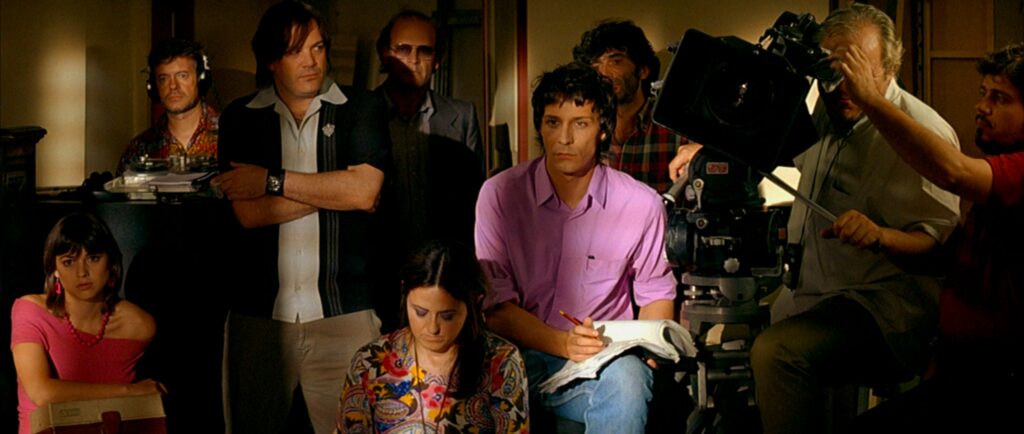
This director-centred model runs into problems when confronted with how films actually get made. While the director may ask for a ‘mood of isolation’ or a ‘sense of dread’, it is the DoP who translates these abstract ideas into physical reality through lens selection, the ratio of key-to-fill light, and precise control of colour temperature. Critics such as Pauline Kael pointed out that auteur theory does not account for essential collaborators, noting that the visual consistency attributed to a director may actually be the work of a consistent cinematographer. When we examine cinematographer vs director creative control, the case for shared authorship becomes evident.
The positioning of the cinematographer as author is not just about screen credit but has real legal and economic consequences. Under European Union law, which follows the auteur tradition, the film director is legally recognised as the author, often excluding the DoP entirely. This ignores the fact that the ‘visual text’ of the film, the actual images audiences watch, is created by the cinematographer. As Philip Cowan argues, a new approach to authorship is needed, one that acknowledges ‘co-authorship’ in visual storytelling. The DoP does not just record what is in front of the camera; they actively construct the story world through technical choices that carry real meaning.
Semiotics of the Photographic Sign: Trace and Transformation
To understand the cinematographer as author, it helps to look at what the camera actually does to reality. The cinematographic image is not a neutral window onto the world but a complex sign system built through specific choices. In semiotic theory, the photograph is defined as an index, a physical trace left by light hitting a photosensitive surface. Theorists like Philippe Dubois and Henri Vanlier describe the photograph as a ‘distal imprint’, a trace that says ‘this was here’. Understanding the semiotics of photography in film helps explain how the DoP transforms raw reality into meaningful images.
However, the cinematographer as author intervenes in this process through what we can call ‘global decisions’. Unlike a painter who makes ‘local decisions’ by adding a brushstroke to a specific spot, the DoP makes choices that affect the entire image at once. These interventions transform raw footage into meaningful visual language.
Framing (Cadrage): The frame is often thought of as just a border. But in terms of visual language, it is a ‘spatial cut’ that extracts a piece of the world from its surroundings. By choosing what goes inside the frame and what stays outside (the hors-champ or ‘off-screen space’), the cinematographer as author acts as narrator. This choice of what to exclude is a primary creative decision; it sets the limits of what the audience knows and directs where they look. The frame points to the world beyond itself, implying a larger reality we cannot see.
Focus (Minceur de Champ): Henri Vanlier introduced the concept of ‘thinness of field’ to describe how photography handles space differently from the human eye. Unlike our eyes, which scan depth continuously, the camera lens divides space into layers based on focus. Only one layer is sharp; everything else falls into blur. This is a directive act by the cinematographer as author, forcing the audience to look at a specific subject. In The English Patient, John Seale used focus not just for clarity but to visually ‘split’ relationships between characters, using shallow depth of field to show emotional distance.
Lighting (Photogeny): In visual terms, film lighting adds a layer of meaning on top of what the image literally shows. It carries emotional and psychological values. High-key lighting tends to feel safe, real, or comedic, while low-key lighting feels mysterious or dangerous. The cinematographer as author manipulates light to transform the emotional meaning of the subject, directly affecting how viewers react both biologically and culturally. The psychology of colour in cinematography shows how these lighting choices shape audience response.
Through these global interventions, the cinematographer as author transforms raw footage into constructed images. The image is no longer just a trace of what was there; it becomes a representation of how it was seen. This shift from ‘recording’ to ‘rendering’ sits at the heart of cinematic authorship and visual storytelling.
The Cinematographer vs. The Screenwriter
The authorship debate often focuses on the director versus the screenwriter. David Kipen’s ‘Schreiber Theory’ argues the writer is the primary author because they create characters, dialogue, and plot. But this text-based view falls apart when applied to cinema’s visual nature. Screenwriting provides the blueprint, but a script saying ‘He walks down the hallway’ does not determine how that walk will feel on screen. That is where the cinematographer as author takes over, determining the emotional experience through visual construction.
The cinematographer as author shapes how the audience experiences the narrative. Handheld camera movement tracking a subject creates visceral, anxious energy that mirrors the character’s state, while a static wide shot of the same action might feel detached or isolated. These are narrative filmmaking decisions made at the level of the lens, not the page. In films like The Tree of Life or The Godfather, the visual atmosphere created by DPs Emmanuel Lubezki and Gordon Willis is so powerful it becomes the primary vehicle for meaning. Visual language operates on a pre-linguistic level, triggering emotional responses that words cannot fully capture.
The Mechanisms of Meaning: Light, Shadow, and Subjectivity
The ‘Prince of Darkness’: John Alton’s Visual Philosophy
To understand how the cinematographer as author works in practice, look at John Alton. A landmark figure in cinematography history, Alton’s work in the 1940s and 50s challenged the Hollywood system and helped define the cinematic look of Film Noir. His philosophy, laid out in his book Painting with Light, held that film lighting should create mood, depth, and psychological impact rather than simply ensure visibility. His John Alton painting with light techniques remain influential today.
Alton saw himself as an artist, a ‘luminartist’, rather than a camera operator or technician. He rejected the flat, even lighting that was industry standard, arguing that ‘black and white are colours’. His approach as cinematographer as author was built on several key principles that demonstrated how lighting design shapes narrative.
Alton believed lighting works like a musical scale. A scene lit with only flat light is like a single held note, monotonous and dull. To create a ‘visual symphony’, the cinematographer as author must use the full range of tones from pure black to bright white. Alton orchestrated these tones to shape audience emotion, arguing that light has a hypnotic power that can induce specific psychological states, just as a cello solo can trigger sadness. This understanding of how lighting shapes audience emotion in film was ahead of its time.
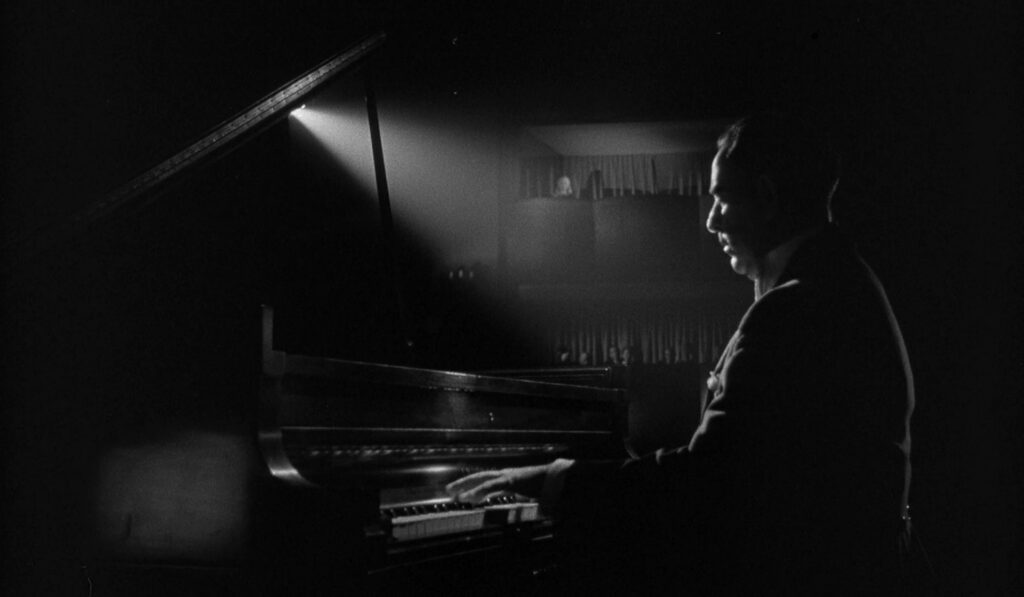
In films like The Big Combo and T-Men, Alton used what he called ‘mystery lighting’. This meant single-source lights placed low on the floor (‘criminal lighting’) to cast long, distorted shadows that warped faces and sets. As cinematographer as author, Alton used this as a narrative device: by hiding actors’ faces or reducing them to silhouettes against fog, he stripped away individual identity, turning characters into graphic shapes struggling against a fatalistic universe. This approach to creating emotional depth with lighting defined an entire genre.
Alton’s authorship was also defined by his methods. He famously lit scenes ‘from the floor’, avoiding the heavy overhead rigs preferred by studio gaffers. He argued this created more realistic shadows, since light in the real world rarely comes from directly above. This technique also made him faster and more efficient. Alton’s legacy as cinematographer as author proves that a DP’s ‘visual vernacular’ can define a genre. Film lighting is not decorative; it builds the emotional reality where the story lives.
Neuro-Cinematics: The Biological Basis of Lighting
Contemporary brain science now provides hard evidence for what Alton knew intuitively about the psychology of colour in cinematography and lighting direction. Studies using EEG to measure brain activity show that lighting direction on a human face produces measurably different emotional responses before viewers are consciously aware of reacting. This research confirms the cinematographer as author directly affects audience neurology through lighting choices.
The standard ‘key light’ position in three-point lighting reveals the face fully, creating depth and normalcy. The brain processes this as a standard, non-threatening social signal. For the cinematographer as author, this is the baseline, the neutral position from which mood and atmosphere depart.
Often called ‘monster lighting’, light from below distorts facial features by casting shadows upward. This triggers an immediate fear response in the brain, which reads the face as a threat before the viewer consciously registers the emotion. The cinematographer as author exploits this biological reaction when using cinematography techniques for suspense and fear.
Placing light behind the subject hides facial features entirely, creating ambiguity and suspense. The brain must work to identify the figure. These findings show the cinematographer as author functions as an ’emotional co-author’. By choosing the key lights placement, the DoP directly modulates the audience’s neurological state. Lighting bypasses the intellectual processing of the plot, establishing a direct link between visual stimulus and emotional response.
Colour Theory and Emotional Architecture
Beyond contrast and direction, the cinematographer as author shapes meaning through colour temperature and palette. Using colour temperature to influence audience mood is a fundamental tool of cinematic authorship. Light is not just brightness; it carries emotional weight.
Warm Tones (Yellow, Orange, Red): These wavelengths feel comfortable, nostalgic, safe, and romantic. They mimic firelight or golden hour, triggering biological relaxation. The cinematographer as author uses them to signal safety or memory. The psychology of colour in cinematography shows warm tones consistently produce these associations across cultures.
Cool Tones (Blue, Cyan, Green): These tones feel detached, melancholy, cold, or alienating. The cinematographer as author frequently uses them for tension or to signal harsh environments. Understanding how colour grading and lighting work together is essential to the modern DoP’s craft.
A powerful example of the cinematographer as author using colour comes from Janusz Kamiński’s work on Schindler’s List. Kamiński and Spielberg chose black and white, stripping the image of colour’s visual pleasure. This forced audiences to engage with the Holocaust through texture and contrast without aesthetic distraction. It created a sense of documentary truth that colour might have sensationalised. The absence of colour was the primary authorial statement, shaping the ethical relationship between audience and subject through visual language.
The Phenomenology of the Lens: Subjectivity and Embodied Simulation
The Camera as Subject: Embodied Simulation
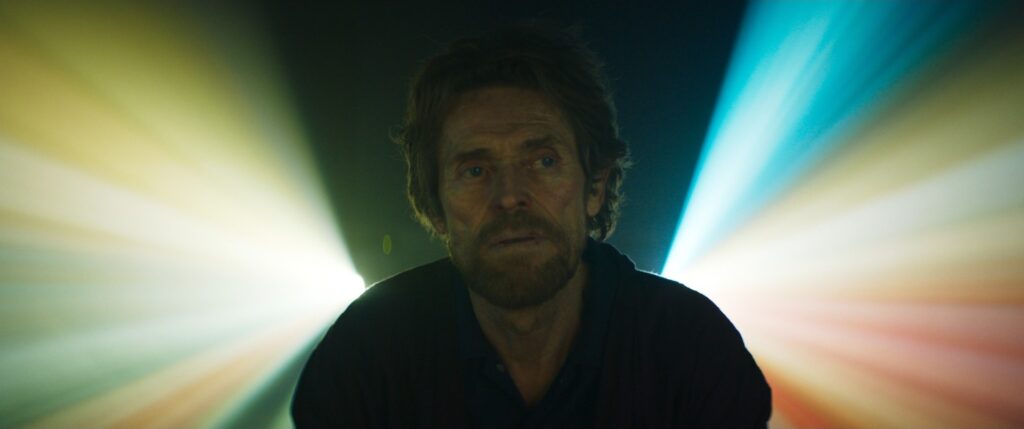
Film theory drawing on Maurice Merleau-Ponty’s phenomenology, developed by scholars like Vivian Sobchack, treats the camera not as an invisible observer but as a ‘quasi-subject’, an anonymous consciousness perceiving the world. Camera movement is not just changing the viewpoint; it inscribes a sense of ‘being’ in the world. When the cinematographer as author chooses a movement style, they define how the audience physically experiences the scene. This relates directly to embodied simulation in film theory.
Recent brain research on subjective camera movement and storytelling supports this view, showing different camera movements trigger different motor responses in viewers, actually simulating physical movement in the viewer’s body. The cinematographer as author controls these responses through movement choices.
Steadicam: The Steadicam creates floating, fluid motion mimicking human balance but without the bounce of footsteps. It produces strong bodily engagement, a ‘subjective’ drift feeling like a disembodied consciousness or ghost moving through space. The cinematographer as author often uses it for dreamlike or supernatural perspectives. This relates to the ongoing discussion of Steadicam vs handheld for subjective POV.
Handheld: Handheld work introduces organic instability, creating ‘you are there’ immediacy. It feels urgent, breathing, imperfect. The cinematographer as author uses it for documentary reality or high anxiety, transferring the character’s physical state, the trembling, running, panicking, directly to the viewer. It signals raw, unmediated subjectivity and demonstrates how camera movement shapes emotional experience.
Static/Dolly: Mechanical movements like dolly shots or locked-off frames offer a more observant, ‘objective’ view. They suggest a stable, perhaps all-knowing narrator separate from the on-screen chaos. The cinematographer as author’s choice to switch from stable dolly to frantic handheld mid-scene is a narrative shift as powerful as any line of dialogue. It changes the audience’s mode of existence in the film world from observer to participant.
Haptic Visuality: Touching with the Eye
The concept of haptic visuality, developed by theorist Laura U. Marks, further establishes the cinematographer as author of sensory experience. Haptic cinema appeals to the sense of touch through the eyes, encouraging viewers to ‘graze’ the image surface rather than master it through sharp clarity. Understanding haptic visuality in cinema examples shows how DPs achieve this through specific technical choices.
Film grain, digital noise, or specific filters create a tactile surface emphasising the image’s materiality. The cinematographer as author uses these to make images feel physical, almost touchable. This contributes to achieving the cinematic look digitally that many contemporary productions seek.
Focusing intently on the texture of skin, fabric, or objects, like the engraving on the globe in Where the Wild Things Are, the cinematographer as author evokes physical sensation, bypassing narrative logic for direct sensory impact. Shot composition at this level becomes a form of haptic visuality in documentary filmmaking and narrative work alike.
By blurring background and foreground, the cinematographer as author forces viewers to dwell on texture within the focused plane. This creates intimate, almost suffocating proximity mimicking the myopia of touch. The film On Body and Soul uses explicitly haptic cinematography, lingering on leaf textures, steam rising from bodies, light on skin. Combined with sound, these images make audiences ‘feel’ temperature, creating multisensory narrative filmmaking through visual language.
Subjectivity and the ‘Unindexed’ Viewpoint
Traditional film theory sorts shots as ‘objective’ (no character’s viewpoint) or ‘subjective’ (a specific character’s viewpoint). But cinematographers often create ‘unindexed subjectivity’, a first-person view not tied to any character yet feeling personal and embodied. The cinematographer as author working in this mode creates a unique form of visual storytelling.
This is the ‘free-floating’ camera of Terrence Malick or Wong Kar-wai. Here the cinematographer as author, whether Emmanuel Lubezki or Christopher Doyle, functions as a separate consciousness witnessing events. The camera does not just show what happened; it shows how being there felt. This phenomenological layer constitutes a distinct creative voice parallel to the director’s work with actors. The camera becomes a character, one that feels, reacts, and interprets action for the audience through visual language.
Case Studies in Cinematographic Authorship
Gregg Toland and Citizen Kane: The Architect of Deep Focus
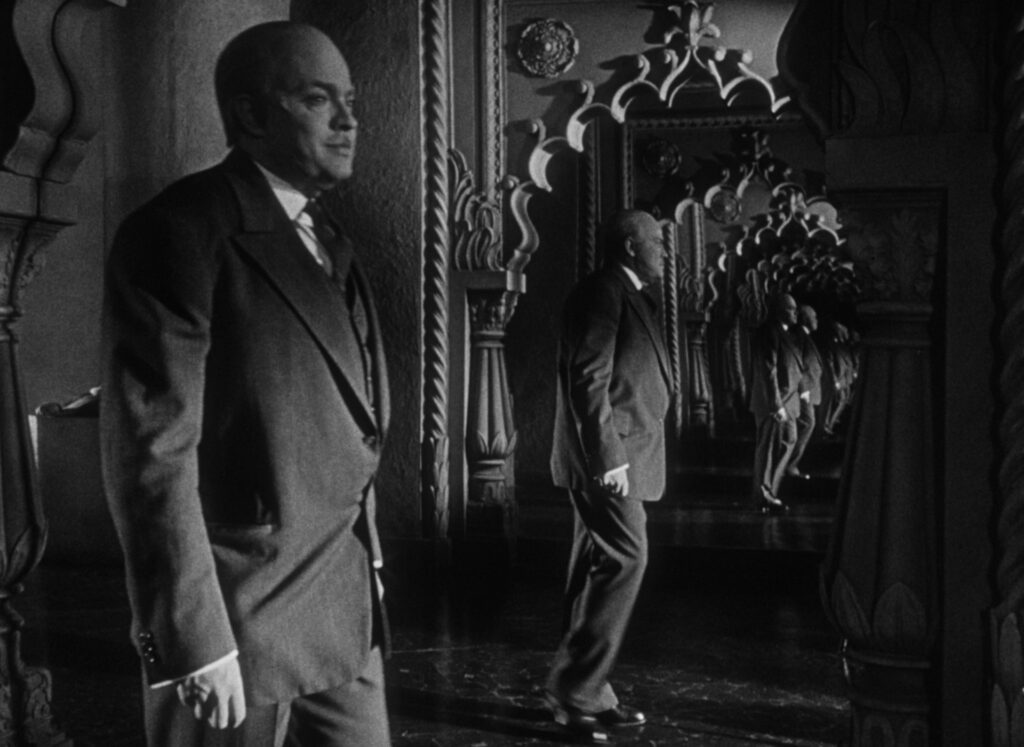
Gregg Toland’s work on Citizen Kane (1941) is the classic example of the cinematographer as author functioning as co-creator. While Orson Welles is celebrated as the auteur, Toland’s technical innovations fundamentally structured the film’s visual storytelling. This cinematographer vs director collaboration example shows how shared authorship works in practice.
Toland perfected ‘deep focus’, keeping foreground, middle ground, and background sharp simultaneously. He achieved this through wide-angle lenses, powerful lighting, and fast film stock, allowing very small apertures (high f-stops). This technical choice had major narrative implications: it enabled ‘staging in depth’, with action on multiple planes without cutting. The cinematographer as author here shapes not just the cinematic look but the grammar of the storytelling itself.
By preserving spatial and temporal continuity, Toland as cinematographer as author let audiences scan the frame and edit with their own eyes. Viewers could choose to watch young Kane playing in snow in the background or his parents signing him away in the foreground. This democratisation of the gaze departed radically from the montage style of the era. Toland’s contribution was so significant that Welles shared his title card credit, explicitly acknowledging the cinematographer as author and co-creator.
Christopher Doyle and Wong Kar-wai: The Blur of Time
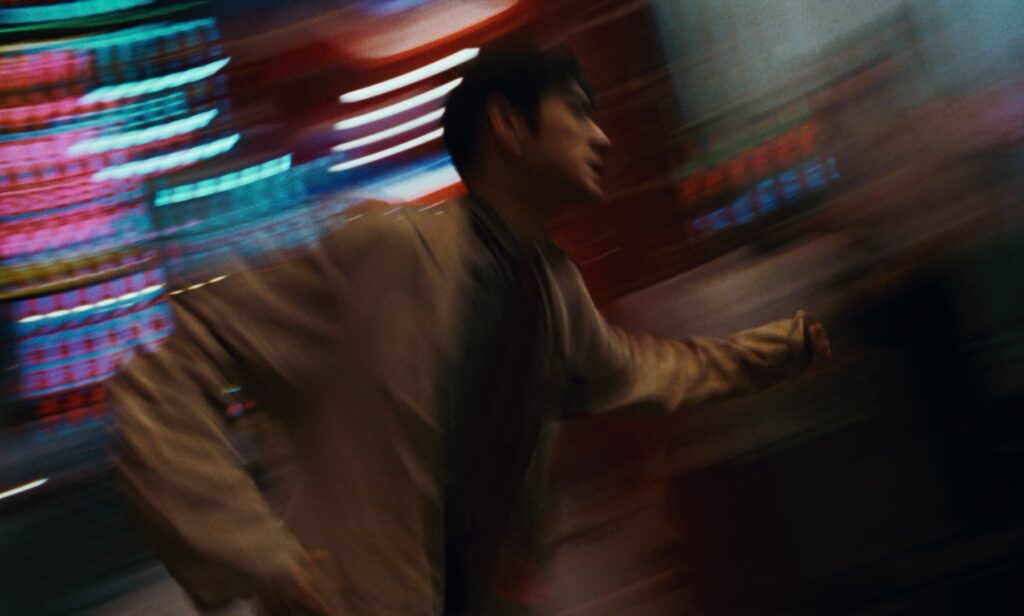
The collaboration between Christopher Doyle and Wong Kar-wai shows a fusion where the cinematographer as author becomes inseparable from the film’s identity. In Chungking Express and In the Mood for Love, Doyle’s visual improvisations defined the mood and atmosphere. This is another key cinematographer vs director collaboration example.
Doyle used techniques like step-printing (shooting at lower frame rates and duplicating frames) to create stuttering, blurred motion representing time passing and memory’s subjective feel. His handheld work and neon-drenched, high-contrast film lighting created a dreamlike quality mirroring characters’ internal states of longing. Critics note Wong Kar-wai’s films without Doyle often lack the same visceral impact. As cinematographer as author, Doyle’s ‘punk’ approach and spontaneity powered the films’ emotional force. His camera does not just observe; it dances with characters, blurring the line between story world and filmmaker’s experience through visual language.
Emmanuel Lubezki and the Long Take: Continuous Being
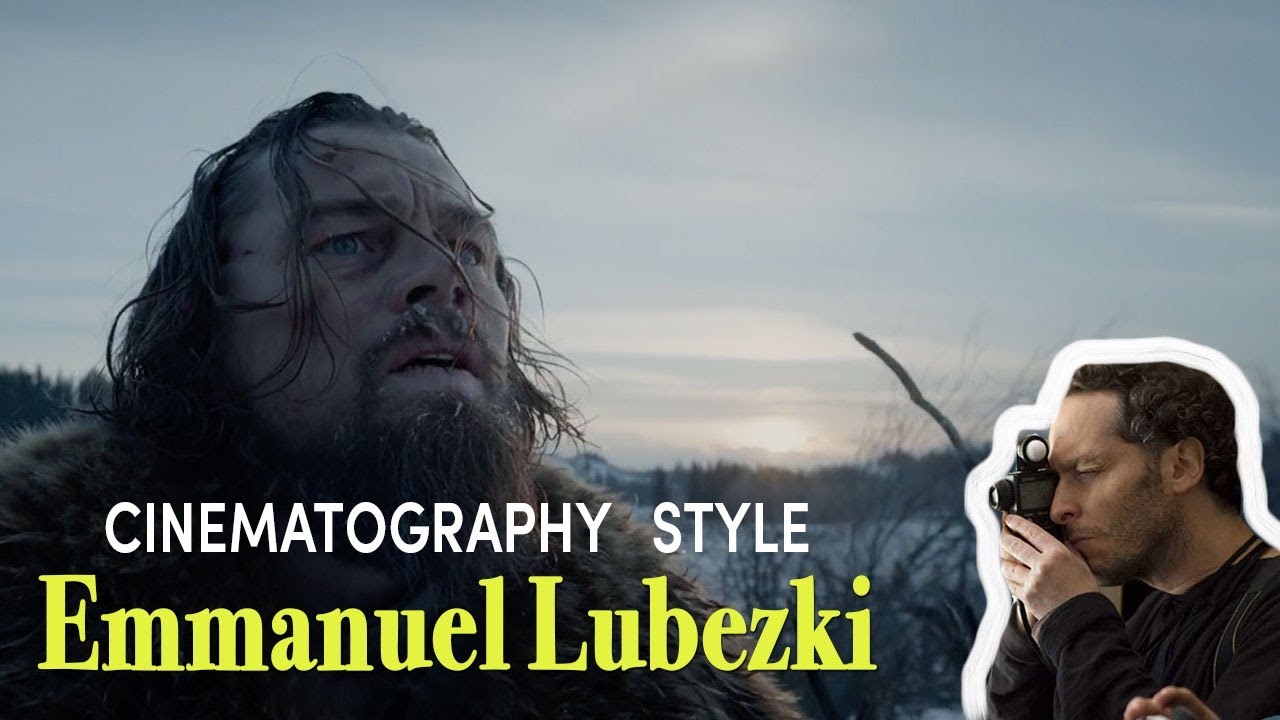
Emmanuel ‘Chivo’ Lubezki has redefined contemporary cinematography through mastery of extended takes, seen in collaborations with Alfonso Cuarón and Alejandro G. Iñárritu (Children of Men, Gravity, Birdman, The Revenant). His work demonstrates the cinematographer as author controlling temporal experience through cinematography techniques.
In Birdman, the illusion of a single continuous shot becomes the narrative itself, trapping viewers in the protagonist’s manic reality without the release of a cut. This required Lubezki as cinematographer as author to integrate film lighting into sets and move lights dynamically to accommodate 360-degree camera freedom. The DoP here dictates rhythm and pacing, taking over what is traditionally the editor’s role. Lubezki’s long take asserts temporal authorship; it forces audiences to endure time alongside characters, creating immersive visual storytelling distinct from montage-based cinema.
The Future of Visual Authorship in an AI Era
Generative AI represents a major challenge to the cinematographer as author since the transition from film to digital. Tools like OpenAI’s Sora, Runway, and Midjourney can create ‘cinematic’ images without a camera, without film lighting, without a physical operator. They decouple the image from any indexical trace of reality, raising questions about visual storytelling and cinematic authorship.
The Replication of Style and the ‘Visual Signature’
The Senate Committee on Adopting Artificial Intelligence (2024) highlighted risks of creative works being used to train AI models. For the cinematographer as author, the risk is specific: their ‘visual signature’, the unique way John Alton lights a face or Christopher Doyle moves a camera, becomes training data. A user can now prompt AI to generate a scene ‘in the style of Roger Deakins‘, potentially replicating years of developed cinematic authorship without the DoP’s involvement.
This creates a crisis where ‘style’ separates from ‘author’. If an algorithm can replicate the cinematic look of a cinematographer as author without that person’s presence, how we define authorship may need to evolve to protect the human element of visual storytelling.
Response Strategies: Legislation and Embodiment
Legislative Protection: Industry bodies are advocating for protection of human creativity. This includes regulating AI training data so cinematographers’ work is not used without consent or compensation, and advocating for local content quotas prioritising human-authored visual storytelling. The cinematographer as author benefits from industry-wide recognition of cinematic authorship.
Emphasising Embodiment: AI can simulate a visual style but cannot replicate the phenomenological encounter of a human operator reacting to an actor in the moment. The embodied simulation and haptic visuality discussed are human traits. The cinematographer as author can emphasise the performative aspect of their work, the ‘dance’ with the subject, the intuitive reaction to light and camera movement, as the locus of authorship. The imperfection of handheld work, the ‘breath’ of the operator, becomes an authenticity marker AI struggles to replicate so far.
Asserting Ownership: The cinematographer as author can use terminology of authorship (‘Created by’, ‘Designed by’, ‘Visualised by’) to prevent their work being categorised as mere ‘content’ or ‘training data’. By controlling the metadata of their images, DPs can establish ownership within algorithmic systems that distribute their visual storytelling work.
Conclusion
The theory of the film director as sole auteur does not hold up under examination through semiotics of photography in film, phenomenology, and industry practice. The filmic text is woven from multiple creative contributions, among which the cinematographer as author is central. Through manipulation of the indexical trace, orchestration of light as visual music, and physical embodiment in camera movement, the Director of Photography structures the audience’s experience of narrative at a pre-linguistic level through visual language.
From the deep focus of Gregg Toland to the noir shadows of John Alton, from the floating subjectivity of Emmanuel Lubezki to the haptic visuality in cinema of contemporary DPs, the history of film is a history of cinematographers writing with light. As the industry faces challenges of the digital and algorithmic age, acknowledging and protecting the cinematographer as author is not merely about credit. It is about preserving the human element of the cinematic image. The DoP is not a camera operator; they are an author of the gaze, an architect of perception, and a primary shaper of meaning in visual storytelling.
What is the difference between a director and a cinematographer regarding creative control?
While the director is responsible for the overall dramatic vision and performance, the cinematographer (DP) controls the technical execution of the image through lighting and camera work. This division of labor is central to the Cinematographer as Author debate, which argues that the DP’s control over the visual translation of the script constitutes a distinct form of authorship that runs parallel to the director’s blocking.
How does lighting affect audience emotion in film?
Lighting is a primary tool for “visual music,” capable of triggering subconscious emotional responses—such as fear from underlighting or romance from warm backlight—before the viewer even processes the plot. By orchestrating these psychological states through contrast and color, the DP functions as an emotional co-creator, validating the concept of the Cinematographer as Author.
What is visual storytelling in cinematography?
Visual storytelling is the art of conveying narrative information, subtext, and mood through visual tools like composition, depth of field, and camera movement rather than dialogue. Mastery of these tools allows the DP to structure the audience’s perception of the story, effectively positioning the Cinematographer as Author of the film’s non-verbal language.
Can a cinematographer be considered an auteur?
Yes, many film theorists and critics argue that cinematographers with a distinct, recognizable visual style (such as John Alton or Christopher Doyle) function as auteurs because their visual signature often transcends the director’s influence. This perspective challenges traditional film theory by establishing the Cinematographer as Author of the gaze and the primary architect of the film’s atmosphere.
How do camera angles and movement shape audience subjectivity?
Camera angles and movements (such as handheld vs. Steadicam) dictate the viewer’s physical and emotional relationship to the action, creating a sense of either objective observation or subjective embodiment. By making these “global decisions” that determine how the audience “feels” the scene physically, the DP asserts their role as the Cinematographer as Author of the spectator’s experience.
What is the “Cinematic Look” and how is it achieved?
The “Cinematic Look” refers to a specific aesthetic quality characterized by high dynamic range, depth of field, and deliberate color grading that separates narrative cinema from broadcast video or reality. Achieving this requires a deep understanding of the “photographic sign” and lighting ratios, technical skills that underpin the theoretical framework of the Cinematographer as Author.