Few people working behind a Hollywood camera have managed to become a genuine household name. Cinematographer Michael Barrett is one of those rare exceptions. To film students and working professionals, he is a respected Director of Photography whose work helped shape the visual language of early 2000s television before he moved to major studio features. To millions of tabloid readers and podcast listeners, he is better known as Anna Faris husband Michael Barrett.
This guide covers every angle of his career and life. Whether you want to explore Michael Barrett cinematographer movies and tv shows, learn about Michael Barrett cinematographer net worth, or simply want to know who this person is and why he matters, you are in the right place. We will trace the path from his student days in California to his ASC Award win, his years spent defining the look of prime-time crime television, his pivot to blockbuster comedies, and his famously low-key marriage to one of Hollywood’s most beloved comic actresses.
Table of Contents
Riverside Kid, Columbia Grad
Cinematographer Michael Barrett was born on 28 May 1970 in Riverside, California. He grew up with an interest in visual art, but it was a chance encounter in 1992 that changed everything. As a young student, he met the legendary Mexican cinematographer Gabriel Figueroa and found himself deep in conversation about Figueroa’s luminous work on the 1947 classic La Perla. For a young man still figuring out his path, the meeting was electric. Figueroa’s understanding of light and shadow gave cinematographer Michael Barrett a clear sense of what he wanted to spend his life doing. Years later, he would still point to that conversation as the moment the switch flipped.
He pursued that ambition with serious academic rigour. He earned a Bachelor of Arts from the University of California, Los Angeles, where the proximity to working studios and the traditions of West Coast filmmaking left their mark. Not content with one coast’s perspective, he then headed east to Columbia University in New York City, completing a Master of Fine Arts in film.
That bicoastal training turned out to be one of the smartest moves he ever made. It gave cinematographer Michael Barrett fluency in two very different filmmaking cultures: the raw, scrappy independence of New York, with its emphasis on naturalism and gritty realism, and the polished, high-budget spectacle of Los Angeles. Both sensibilities would serve him well in the years ahead.
How CSI Changed the Way Crime TV Looked
The early 2000s were a wild time for American television, and cinematographer Michael Barrett landed right in the thick of it. While the phrase “prestige TV” was still years away from common use, shows were beginning to look genuinely cinematic. Few series embodied that shift more dramatically than CSI: Crime Scene Investigation.
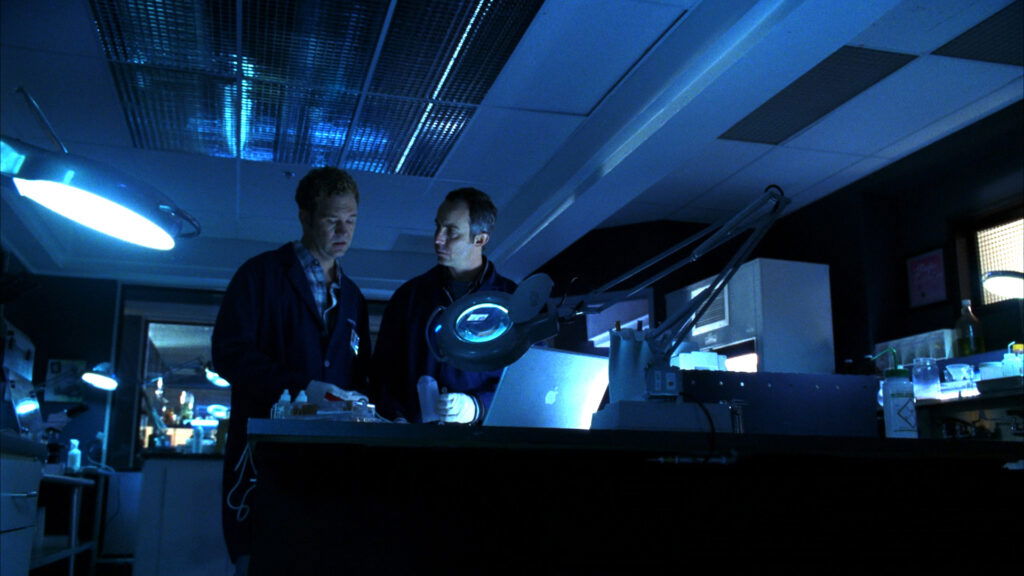
When cinematographer Michael Barrett joined the crew in 2001, the show was already a ratings juggernaut. But it was also doing something visually unprecedented for network television. The forensic procedural demanded a look that was dark, moody, and heavily stylised. Evidence needed to look spectacular under a microscope. Crime scenes needed an atmosphere thick enough to cut with a knife.
This is where the skills of a gifted DP really mattered. As Michael Barrett director of photography CSI, he deployed bold colour gels, deep pools of shadow, and extreme close-ups that transformed mundane laboratory equipment into something almost operatic. The result was a show that didn’t just tell you a story about forensic science; it made you feel like you were inside the evidence itself.
Working on a television schedule, especially one as demanding as a hit network drama, forced him to get fast. Cinematographer Michael Barrett learned to make sharp, decisive lighting choices without sacrificing quality. That speed became one of his biggest strengths going forward. His work on CSI was not just popular with audiences; it earned serious critical recognition too. The Michael Barrett award-winning cinematography chapter of his career reached a peak in 2002 when he took home the American Society of Cinematographers Award for Outstanding Achievement in Cinematography for his work on the CSI: Miami backdoor pilot, “Cross Jurisdictions.” He also collected two further ASC nominations for the flagship series.
Over the course of 31 episodes, cinematographer Michael Barrett helped establish a visual grammar that would be copied by crime shows for the next decade. If you watched procedural television in the 2000s and noticed that everything suddenly looked moodier and more cinematic, you were seeing the ripple effects of what he and the CSI team built.
From the Small Screen to the Big One
Television can make a DP’s reputation, but Hollywood’s feature film world operates on a different scale entirely. The budgets are bigger, the schedules longer, and the creative demands more varied. Cinematographer Michael Barrett made the transition look easy.
His early feature work showed the one quality that producers prize above almost everything else in a DP: versatility. A comprehensive look at movies filmed by Michael Barrett reveals a professional who refused to be typecast. He could swing from dark noir to broad comedy, from intimate character study to effects-heavy spectacle, and make each project feel visually distinct.
Neon, Noir, and Robert Downey Jr.
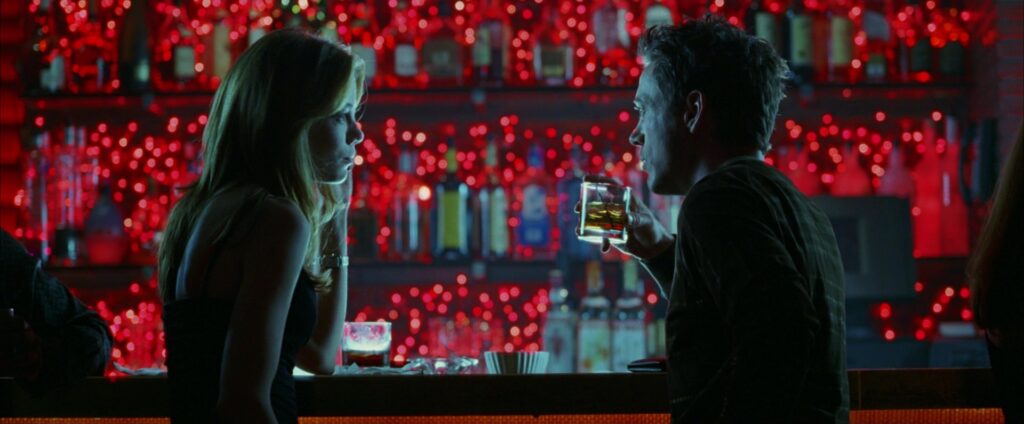
One of the landmark films in the Michael Barrett filmography is Shane Black’s 2005 neo-noir action comedy Kiss Kiss Bang Bang. The film is a love letter to the hard-boiled detective genre, filtered through Black’s trademark wit and self-awareness. Getting the cinematography right was no small task. The Michael Barrett cinematographer Kiss Kiss Bang Bang style had to walk a tightrope: dark and cynical enough to honour classic Los Angeles noir, yet bright and energetic enough to support the rapid-fire banter between Robert Downey Jr. and Val Kilmer.
Cinematographer Michael Barrett rose to the challenge by making brilliant use of practical locations. He bathed his actors in the glow of neon signs, harsh streetlamps, and warm Californian sunsets, creating a world that felt simultaneously dangerous and inviting. The film’s visual approach has since earned it cult classic status, and its cinematography is regularly studied in film schools. The Michael Barrett cinematographer visual style on display here is textbook stuff: motivated lighting, a keen sense of colour temperature, and an instinct for letting the location do half the work.
Making Comedies Look Good (Harder Than You Think)
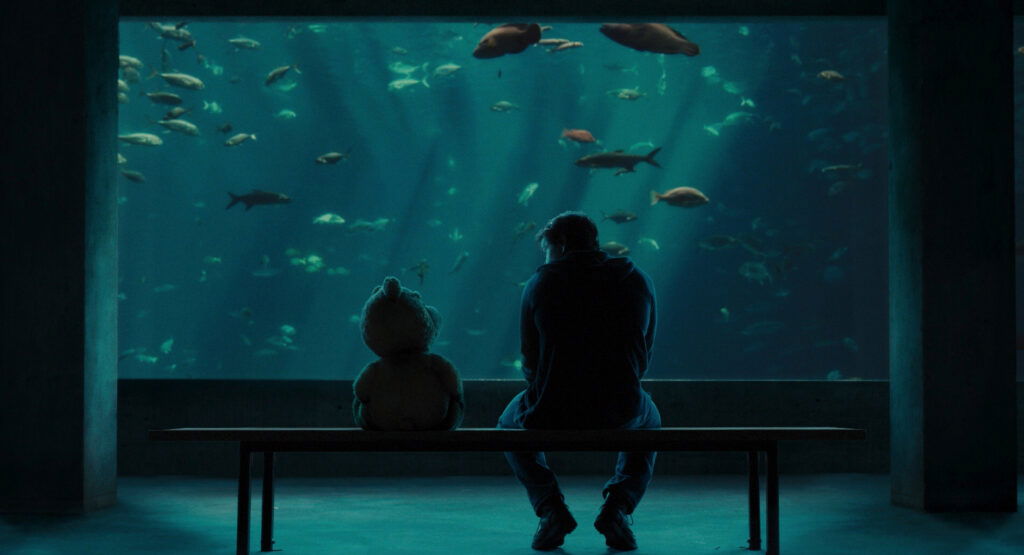
As his feature career matured, cinematographer Michael Barrett carved out a particularly strong niche in studio comedy. He developed an ongoing collaboration with Seth MacFarlane, serving as DP on Ted (2012), A Million Ways to Die in the West (2014), and Ted 2 (2015). The Ted franchise alone grossed hundreds of millions at the global box office, making these among the most commercially significant entries in the Michael Barrett filmography.
Shooting comedy well is harder than it looks. Ask any DP and they will tell you the same thing. The lighting needs to be broad and flattering enough to give performers room to improvise and move freely, but it cannot look flat, dull, or televisual. The audience should not be thinking about the cinematography; they should be laughing. Yet the images still need to be rich enough to hold up on a big screen. Cinematographer Michael Barrett excelled at this balancing act, providing handsome, cinematic visuals that elevated the material without ever drawing attention away from the jokes.
His comedy credits extend well beyond MacFarlane. Films like Zookeeper (2011), Bedtime Stories (2008), and You Don’t Mess with the Zohan (2008) all required him to blend live-action performance with significant visual effects work, and Michael Barrett movies in this genre consistently delivered polished, professional results. He became one of those DPs whose name on a project reassured studios that the final product would look the part, regardless of genre.
Not Just a Comedy Guy
It would be a mistake, however, to think of cinematographer Michael Barrett purely as a comedy specialist. His 2006 work on Emilio Estevez’s ensemble drama Bobby earned him a Golden Frog nomination at the prestigious Camerimage Festival, one of the highest accolades a cinematographer can receive for feature work. The film, set against the backdrop of Robert F. Kennedy’s assassination, demanded a warm, period-specific palette quite unlike anything in his comedy portfolio. Cinematographer Michael Barrett nailed it, proving once again that his range extends as far as the material requires.
Other notable dramatic entries in the Michael Barrett filmography include Takers (2010), Everything Must Go (2010), and the thriller Night Hunter (2018). Each presented unique visual challenges, and each benefited from a DP who approaches every project as its own distinct problem to solve.
What Cameras Does He Shoot On?
For the technically minded, the question of how cinematographer Michael Barrett achieves his look is worth digging into. His career spans the single biggest gear change the industry has gone through in decades: the shift from photochemical film to digital capture.
Film, Then Digital
Cinematographer Michael Barrett began his career shooting on 35mm film. The organic grain and texture of celluloid defined his early television work on CSI and his feature debut period, including Kiss Kiss Bang Bang. There is a warmth and tactility to film-originated images that digital cameras have spent years trying to replicate, and Barrett’s early work demonstrates a deep understanding of what the format could do.
Around 2012, like many of his peers, he transitioned primarily to digital cinema cameras. He was an early adopter of high-end systems including the ARRI Alexa and Sony CineAlta series, both of which have become industry standards. The switch was not just about convenience; it opened up new ways of working. Digital sensors, particularly large-format ones, allowed for shallower depth of field, finer control over exposure in challenging lighting conditions, and faster turnaround in post-production.
How He Lights a Scene
The Michael Barrett cinematographer visual style is best described by its adaptability. In his dramatic work, he favours rich, warm tones and motivated lighting that feels embedded in the world of the story. In his comedies, he opts for clean, open compositions that keep the focus squarely on performance. In his noir-influenced projects, he embraces deep shadows and saturated colour.
The common thread is that he always puts the story first. He has never been a DP who imposes a single aesthetic onto every project. Instead, he reads the material, understands what the director needs, and crafts a visual approach from scratch each time. That might sound like a given, but in practice, surprisingly few DPs actually work that way.
Awards
The Michael Barrett award-winning cinematography track record is built on peer recognition, which in many ways is the most meaningful kind. His key accolades include winning the 2002 ASC Award for Outstanding Achievement in Cinematography for the CSI: Miami pilot “Cross Jurisdictions,” receiving ASC nominations in 2002 and 2003 for the flagship CSI: Crime Scene Investigation, and earning a 2006 Golden Frog nomination at Camerimage for Bobby.
None of these are audience-voted popularity contests. They are handed out by working cinematographers and industry professionals who know exactly how hard the job is. For a DP like cinematographer Michael Barrett, there is no higher compliment than the respect of the people who do the same work.
Marriage with Anna Faris
While his professional credits speak for themselves, a huge chunk of public interest in cinematographer Michael Barrett has nothing to do with cameras. He entered the mainstream celebrity conversation when his relationship with comedic actress Anna Faris became public knowledge. For a lot of people, the question that brought them here is simply how did Anna Faris and cinematographer Michael Barrett meet.
Meeting on the set of Overboard
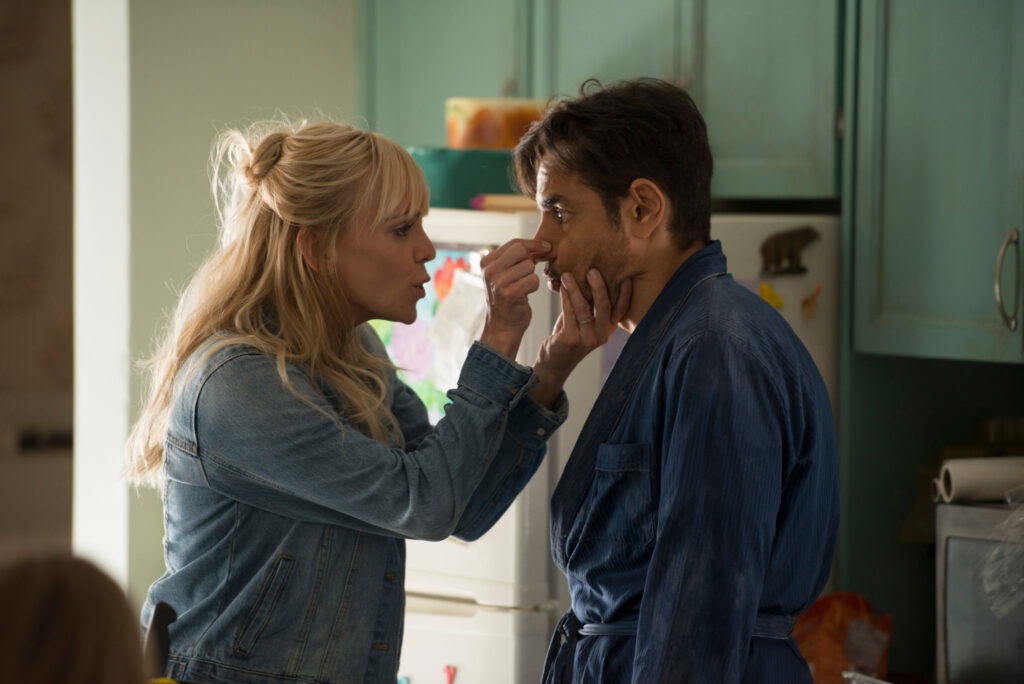
The answer is thoroughly Hollywood. In 2017, Faris was cast in the lead role of the comedy remake Overboard, alongside Eugenio Derbez. Cinematographer Michael Barrett was hired as the film’s Director of Photography. Long days on set, shared creative energy, and the kind of close collaboration that filmmaking demands led to a genuine connection.
Faris had recently gone through a highly publicised separation from actor Chris Pratt, and the new relationship developed quietly, away from tabloid scrutiny. Friends and fans noted the pairing of Michael Barrett Anna Faris as a refreshing contrast: a beloved actress finding happiness with a grounded, behind-the-scenes professional who had no interest in the spotlight for its own sake. It was the kind of romance that felt genuinely organic rather than manufactured for public consumption.
In February 2020, Anna Faris confirmed that she and cinematographer Michael Barrett were engaged. The entertainment press anticipated a lavish event. Instead, in a move perfectly in keeping with their low-key approach, the couple eloped.
The news broke in July 2021 when Faris casually revealed on her podcast Unqualified that she and cinematographer Michael Barrett had already tied the knot at a courthouse on San Juan Island in Washington state. She described the day as beautiful and simple, exactly what they both wanted. It was a deliberate choice that said more about their values than any red-carpet affair ever could. Today, Anna Faris husband Michael Barrett supports her public endeavours while maintaining his own active shooting schedule. He has embraced his role as stepfather to Faris’s son Jack, and the family reportedly divides their time between Los Angeles and Washington.
What Does a Top DP Actually Earn?
Money talk is unavoidable when discussing Hollywood careers, and searches for Michael Barrett cinematographer net worth pop up constantly. While Directors of Photography do not command the headline-grabbing upfront fees of A-list actors, elite DPs working on major studio features and long-running network series earn substantial incomes.
Between his extensive television run on CSI, his string of high-grossing studio comedies, and his continued steady output, Barrett has built significant financial stability over a career spanning more than two decades. Industry estimates place Michael Barrett net worth comfortably in the multi-million dollar range, though precise figures remain private. What is clear is that his consistent, high-quality output across both television and features has translated into long-term commercial value, both for the projects he works on and for his own professional standing in an increasingly competitive industry.
Filmography
To get the full picture of what cinematographer Michael Barrett has done, it helps to see the credits laid out. A visit to the Michael Barrett IMDb page (noting that several people share his name in the industry, so look for the DP born in 1970) reveals just how much ground he has covered.
Television
CSI: Crime Scene Investigation (2001 to 2004, 31 episodes), CSI: Miami (2004, pilot and early episodes), Close to Home (2005 to 2006), and the Supergirl pilot (2015).
Feature Films
Lone Star State of Mind (2002), Kiss Kiss Bang Bang (2005), Bobby (2006), Bedtime Stories (2008), You Don’t Mess with the Zohan (2008), Takers (2010), Everything Must Go (2010), Zookeeper (2011), A Very Harold and Kumar 3D Christmas (2011), Ted (2012), About Last Night (2014), A Million Ways to Die in the West (2014), No Good Deed(2014), Ted 2 (2015), The Clapper (2017), Overboard (2018), Gotti (2018), and Night Hunter (2018).
Whether framing a forensic crime scene, a slapstick comedy set piece, or a tense dramatic confrontation, cinematographer Michael Barrett has consistently delivered images that serve the story. Look at that list and try to find a pattern. You cannot. That is the point.
Conclusion
In an industry that relentlessly celebrates the people standing in front of the camera, cinematographer Michael Barrett has pulled off something unusual. He is both a craftsman whose peers have honoured him with membership in the American Society of Cinematographers and a public figure whose personal life has drawn mainstream media attention. That overlap almost never happens for someone working behind the lens.
What keeps his story interesting is the thread running from the young student inspired by Gabriel Figueroa all the way to the seasoned professional still taking on new challenges decades later. Cinematographer Michael Barrett took that early encounter and ran with it. From the neon-soaked streets of Kiss Kiss Bang Bang to the clinical glow of the CSI lab, from the broad comedy of Ted to the period warmth of Bobby, he has left a clear mark on the visual culture of 21st-century filmmaking.
For aspiring cinematographers, his career is worth studying closely. You can shoot noir and comedy, television and features, drama and spectacle, and still maintain a coherent creative identity. That identity, for cinematographer Michael Barrett, has always been defined by one simple principle: serve the story first, and the rest will follow.
There is also a practical takeaway for DPs trying to navigate the current industry landscape. Television and streaming have blurred the lines that once separated the small screen from features, and the ability to work fluently across both formats is no longer a bonus; it is a necessity. Cinematographer Michael Barrett was doing exactly that before most of his contemporaries caught on, and the breadth of his filmography stands as proof that the approach works.
Who is cinematographer Michael Barrett?
Cinematographer Michael Barrett is an American Director of Photography born on 28 May 1970 in Riverside, California. He is known for his award-winning work on CSI: Crime Scene Investigation, feature films including Kiss Kiss Bang Bang, Ted, and Bobby, and his membership in the American Society of Cinematographers.
How did Anna Faris and cinematographer Michael Barrett meet?
They met in 2017 on the set of the comedy film Overboard, where Faris starred and Barrett served as Director of Photography. They began dating and eventually eloped at a courthouse on San Juan Island, Washington, in 2021.
What is Michael Barrett cinematographer net worth?
While exact figures are not publicly disclosed, industry estimates place his net worth comfortably in the multi-million dollar range. His decades of consistent work on major network television and high-grossing studio films have generated substantial career earnings.
What cameras does Michael Barrett use?
Cinematographer Michael Barrett shot extensively on 35mm film during his early career, including on CSI and Kiss Kiss Bang Bang. He transitioned primarily to digital cinema cameras around 2012 and frequently works with the ARRI Alexa and Sony CineAlta systems, using large-format sensors to achieve his signature cinematic look.
What awards has cinematographer Michael Barrett won?
His key accolades include the 2002 ASC Award for Outstanding Achievement in Cinematography for the CSI: Miamipilot “Cross Jurisdictions,” ASC nominations in 2002 and 2003 for CSI: Crime Scene Investigation, and a 2006 Golden Frog nomination at Camerimage for the feature film Bobby.
Where can I find the full Michael Barrett filmography?
The complete list of credits is available on IMDb. Search for Michael Barrett and look for the Director of Photography born in 1970 to ensure you are viewing the correct profile, as several industry professionals share the name.